Machine learning in action!
Today’s demonstration showcases the practical application of machine learning through the Sound-ID feature within the free iPhone app, Merlin. Utilizing this technology, users can classify bird sounds into groups (classes) defined by the species of the bird making the noise.

Through Merlin Sound-ID, recorded bird sounds are transformed, processed, and analyzed. This process enables accurate bird species identification, illustrating the power of artificial intelligence in understanding and categorizing natural sounds.
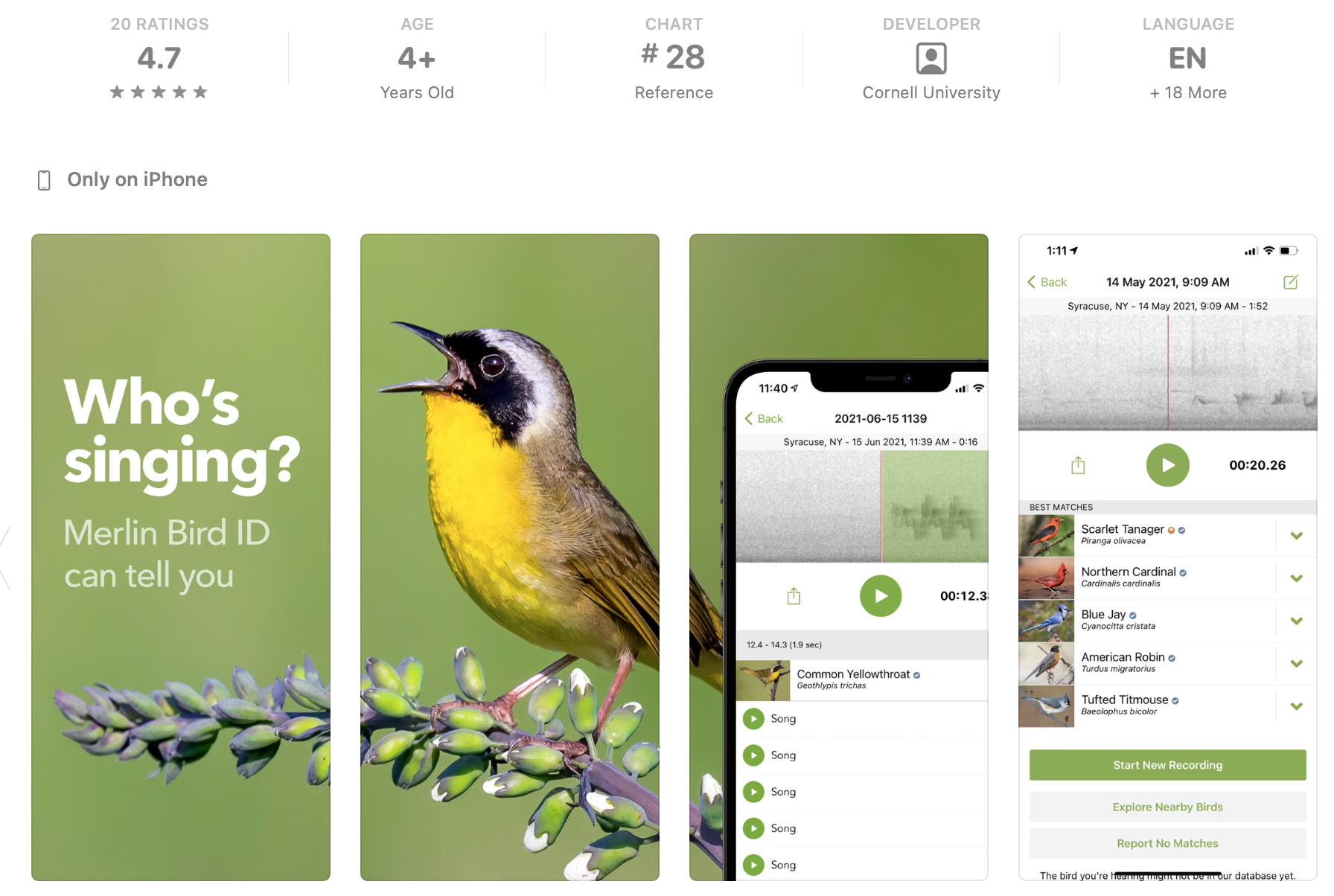
Sound ID listens to the birds around you and shows real-time suggestions for who’s singing.
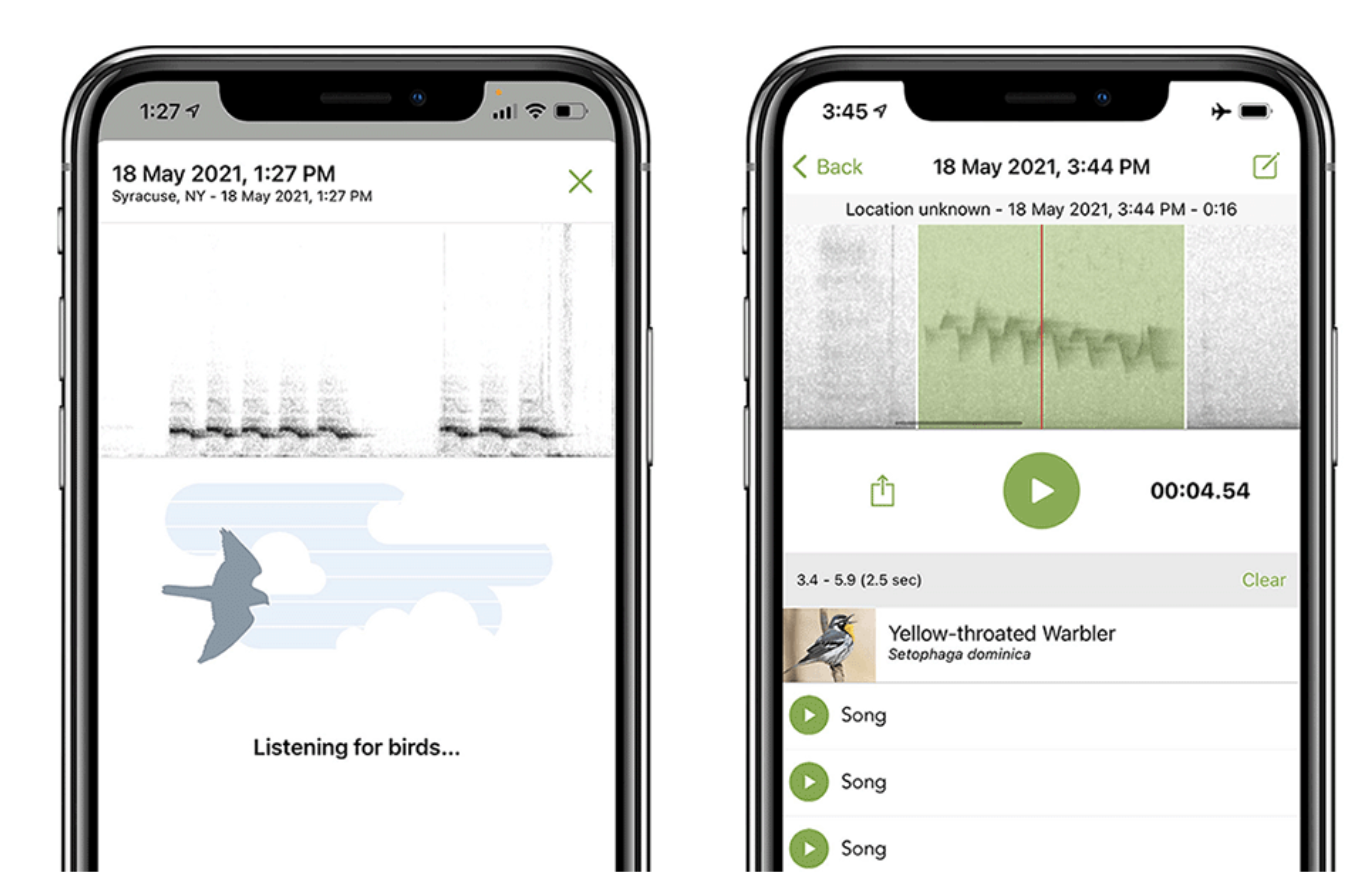
This application is an excellent example of the result of an interdisciplinary collaboration at the intersection of ornithology, biology, data science, citizen science, machine learning, and technology.
To learn more, visit their website! https://merlin.allaboutbirds.org/
Motivating demonstration
Download the app!
To get started, lets explore the app ourselves!
If you want to explore the app yourself and use it next time you’re out in nature, then you can download the application on Android or iPhone from the app-store.
Lets get some data!
In order to use the app, we need some bird sounds!
Unfortunately we didn’t bring any birds with us today 😔, but luckily YouTube can provide us with the data we need!
Running on iPhone
The following shows the result of running the application on iPhone, while listing to the YouTube video above!
In this process, raw audio data is the input, which is processed and converted into a mathematical representation known as a spectrogram, this spectrogram is then processed by a machine learning algorithm to produce an output, which is the type (or class) of bird heard in the recording.
Similar applications
What are some other applications, that use similar work-flows, that you might be familiar with?
A few examples come may to mind!
Voice to text
Voice-to-text converts spoken words into written text using speech recognition algorithms. It analyzes audio recordings, identifies spoken words, and accurately transcribes them into written form.

In this case, audio data is still the input, which is converted into a spectrogram, with the output being the relevant text in the signal.
Demonstration:
Text is just another form of data! Natural language processing (NLP) is the machine learning field concerned with processing textual data. Our program offers several courses focusing on NLP applications.
DSAN-5000:Data Science and AnalyticsDSAN-5400:Computational Linguistics – Advanced PythonDSAN-5800:Advanced Natural Language ProcessingDSAN-5810:NLP with Large Language ModelsDSAN-6600:Neural Networks and Deep Learning
For a full ‘tour’ of our courses, please refer to our course catalog.
https://analytics.georgetown.edu/program-overview/course-descriptions/
Music classification
Music classification involves categorizing music into different genres, styles, or other attributes based on various features such as rhythm, melody, instrumentation, and vocal characteristics.

Shazam is a music classification app that identifies songs by analyzing audio snippets. It matches the audio fingerprint against a vast database, providing users with song titles and artist information.
Demonstration-1:
Let’s try with an older song example.
Demonstration-2:
Let’s try again with something a little more modern.
The company also as a mobile application, which you maybe familiar with!
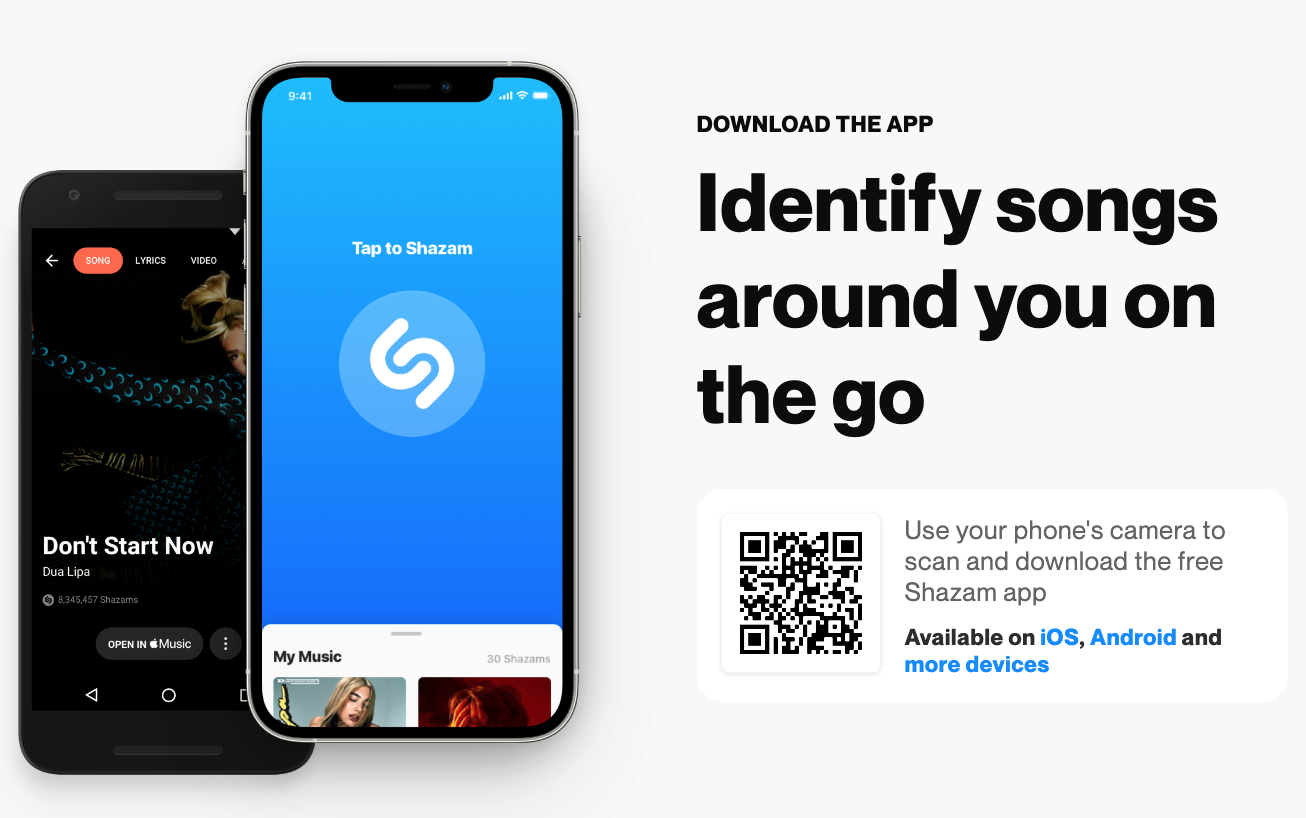
For more information, visit their website: https://www.shazam.com/
Audience discussion
Does anyone want to take a guess how the Merlin Bird app works?- What does the raw input data look like?
- How is the data transformed for processing?
- What type of machine learning is it doing?
- What type of model is it using?
- How did it “learn”?
- Do you currently think you could re-produce a version of this application, from scratch, on your own?