Introduction to Network dynamics`
Today: Network dynamics (Chapter-7)
Dynamics:\(\rightarrow\) what happens to a network over timee.g. information diffusion: epidemics, opinion formation, and search.
![]()
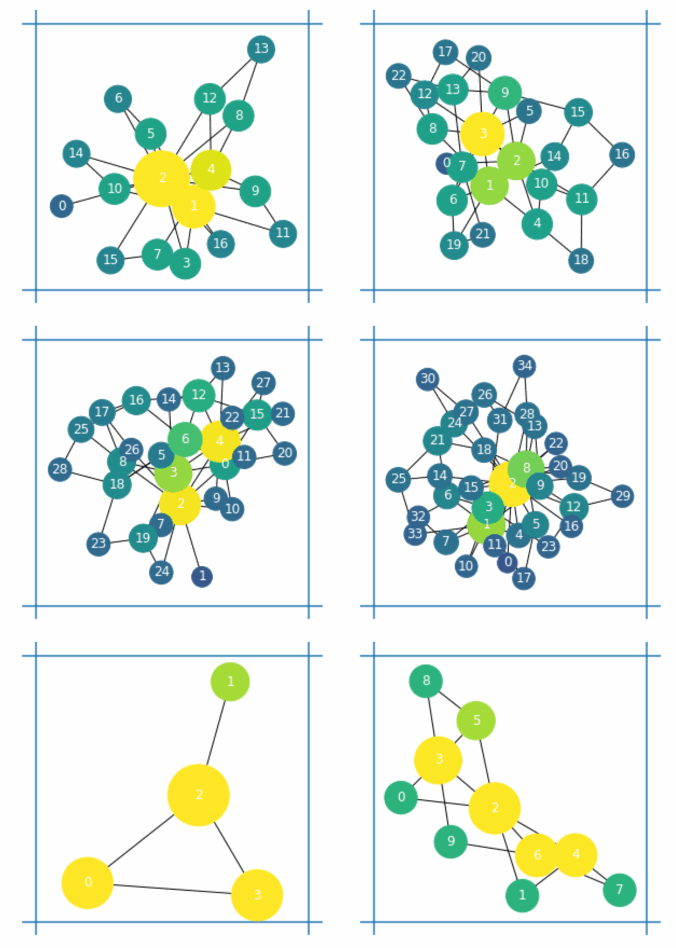
Example: Network growth
- Example of a dynamic
network structurevia network growth
- New nodes are added to the network as time progresses
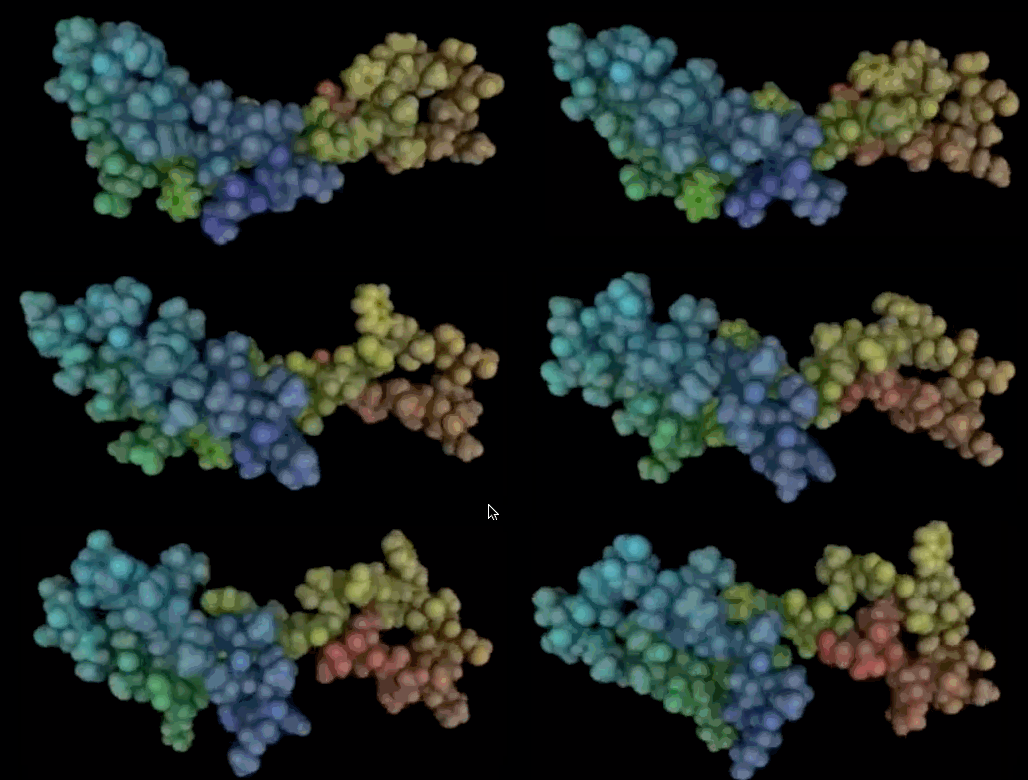
Example: Thermal energy flow
- Crystalline and amorphous solids are composed of networks of bonded atoms.
- As time progresses, positions, velocities, and energies (i.e nodal attributes) of the atoms change
- The theoretical formalisms of
Thermodynamicsandsolid-state physicsgovern the dynamics of such systems.
- The temporal evolution of such systems can be simulated using
Molecular dynamicsandmonte-Carlosimulation methodologies.
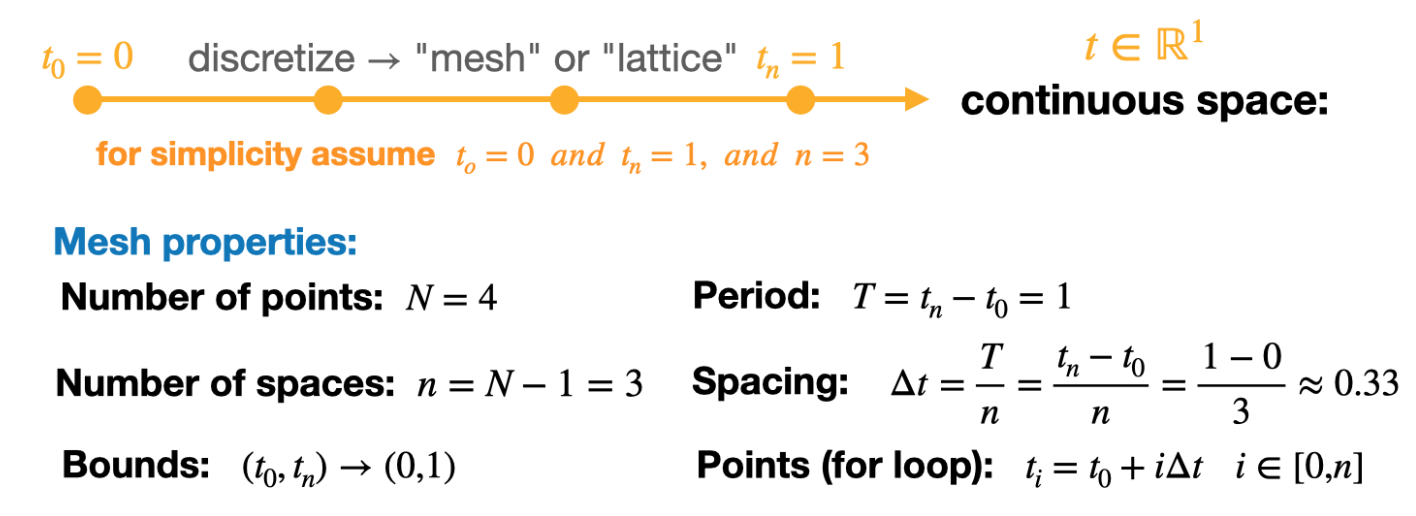
Temporal discretization
- A
meshis a discretization of a geometric domain into small simple shapes, such as triangles, squares, or quadrilaterals. Meshes can be uniform or non-uniform. - Meshes are very important in applied math, since they from the domain on which our numerical functions are defined
- For the case of time, the time-domain mesh is just a single variable
Time-series data
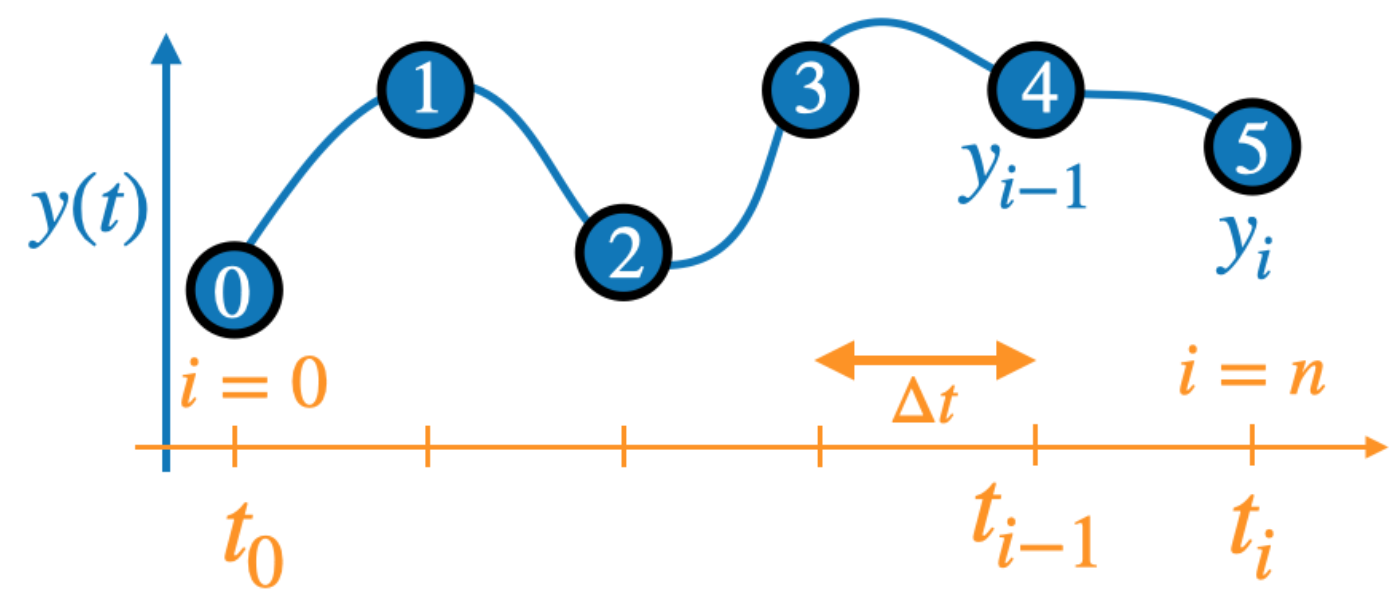
- Numeric time-series analysis requires us to define our time-series \(y(t)\) on a mesh.
- This is typically a uniform mesh, i.e. with a constant \(\Delta t\)
- (e.g. seconds, year, days, months, etc)
Storing temporal Network data
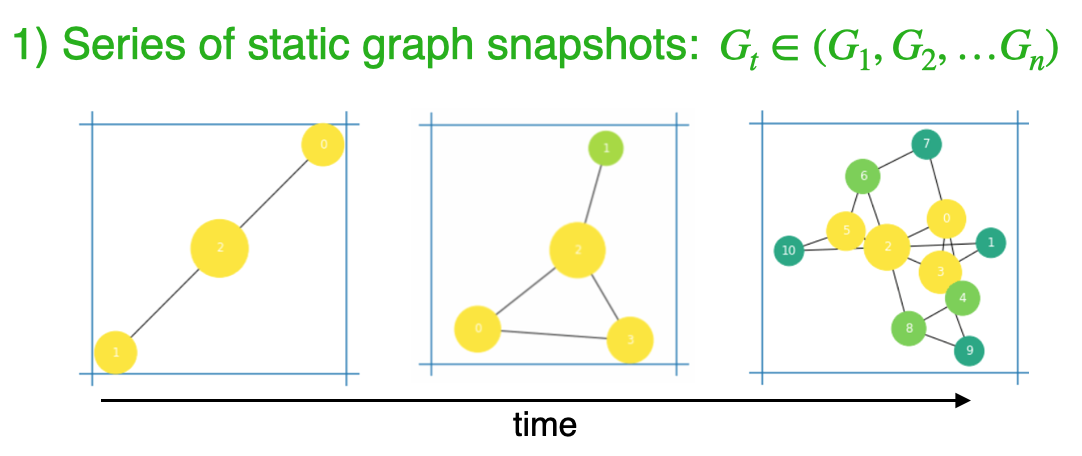
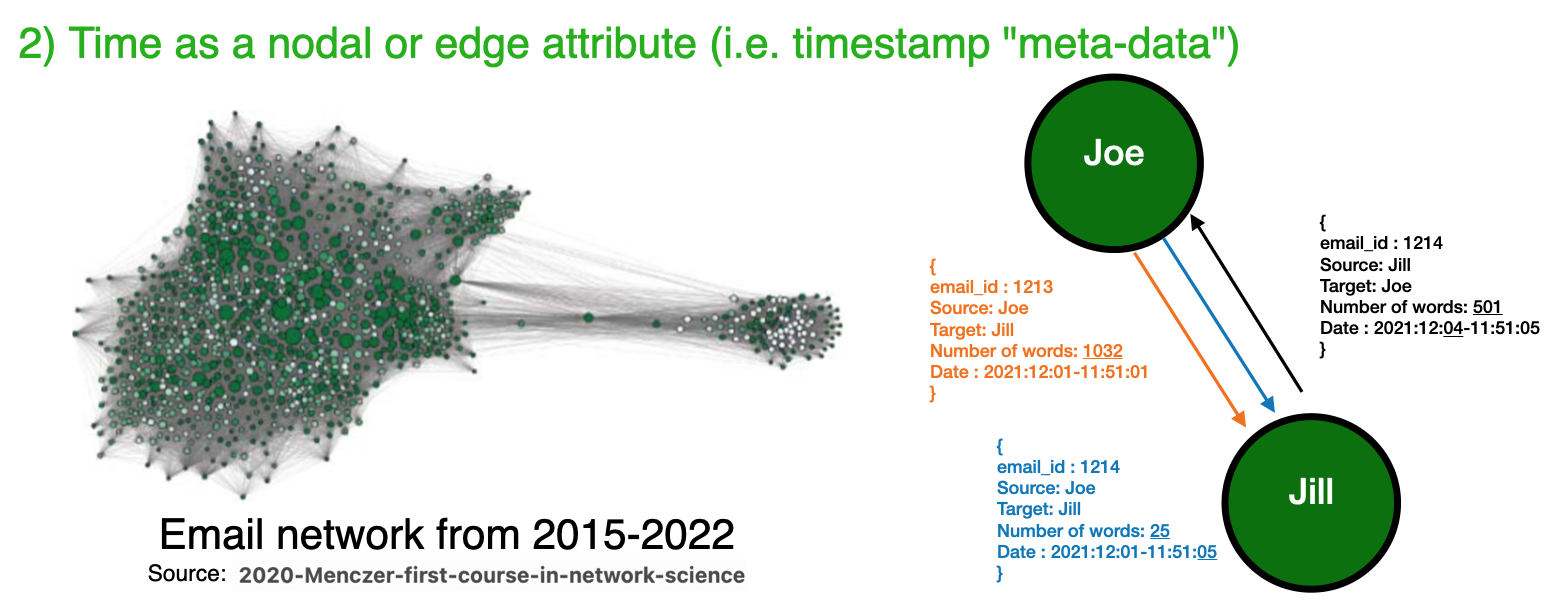
The following are common ways to store dynamic network data. Next week, we visualize dynamic networks in Gephi.
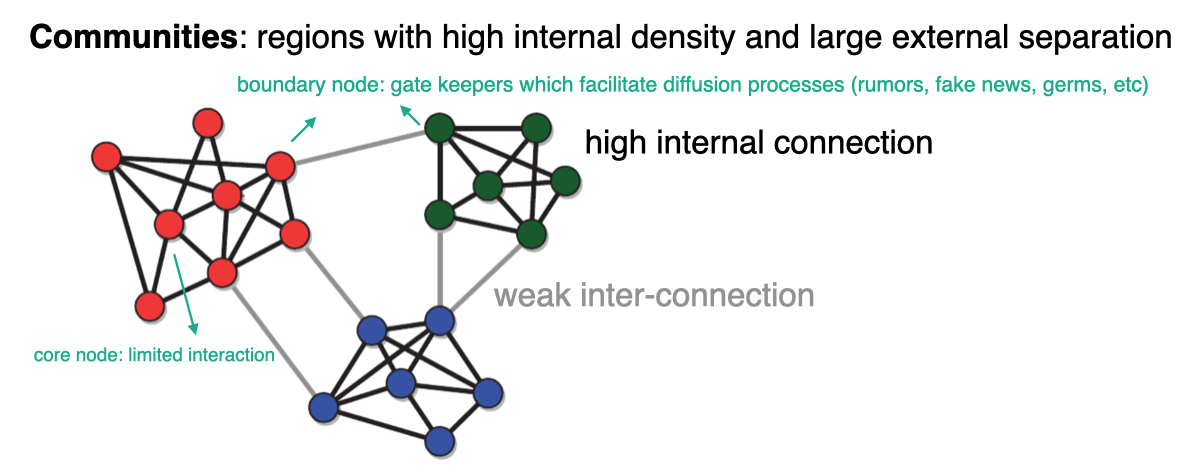
Communities are important in network dynamics
- Network structure plays an important role in the size and behavior of network diffusion processes
- This is because spread is facilitated within dense communities, but hindered by regions of low density (i.e. between) communities.
- Community boundaries act like walls to network spread
Dynamic network analysis methods
- Continuous: Let network continuously vary and evolve in time, visualize & analyst manually, draw determine trends and reach conclusions
![]()
- Time-windows: Divide network into static segments and analyze each individually (similar to what we’ve done in the past)
![]()


Dynamic network analysis methods
- Time-series approach: Treat network as a set of time-dependent attributes and apply time series analysis and visualization
- In this case, we can think of a dynamic network as a collection of inter-related time-series. One for each of the network properties which have a temporal dependence.
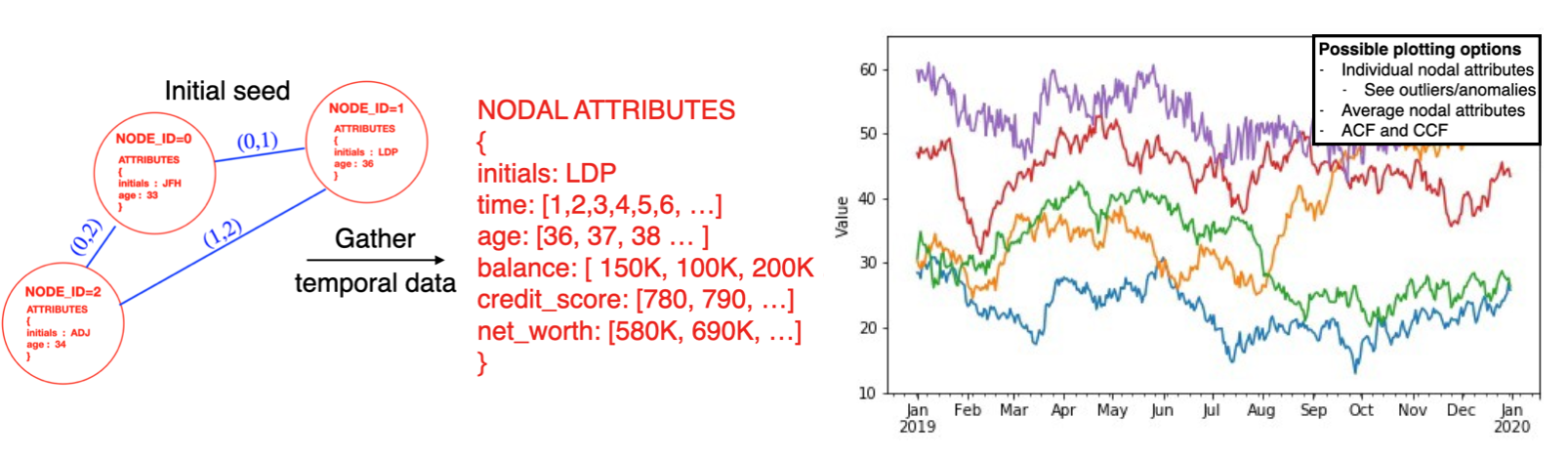
- From this prospective, we can use all of the standard visualization and modeling tools common to time-series analysis
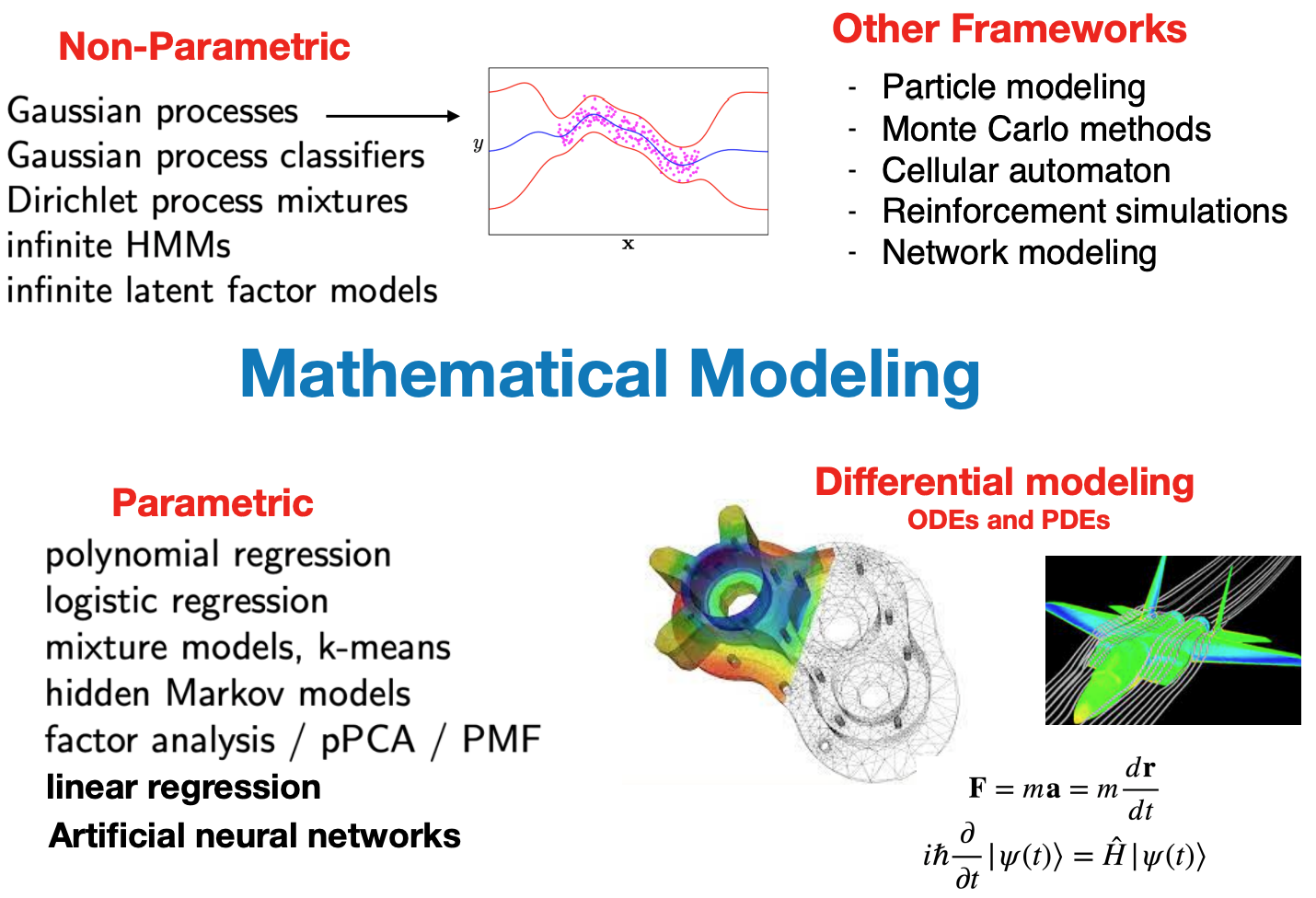
Model categories
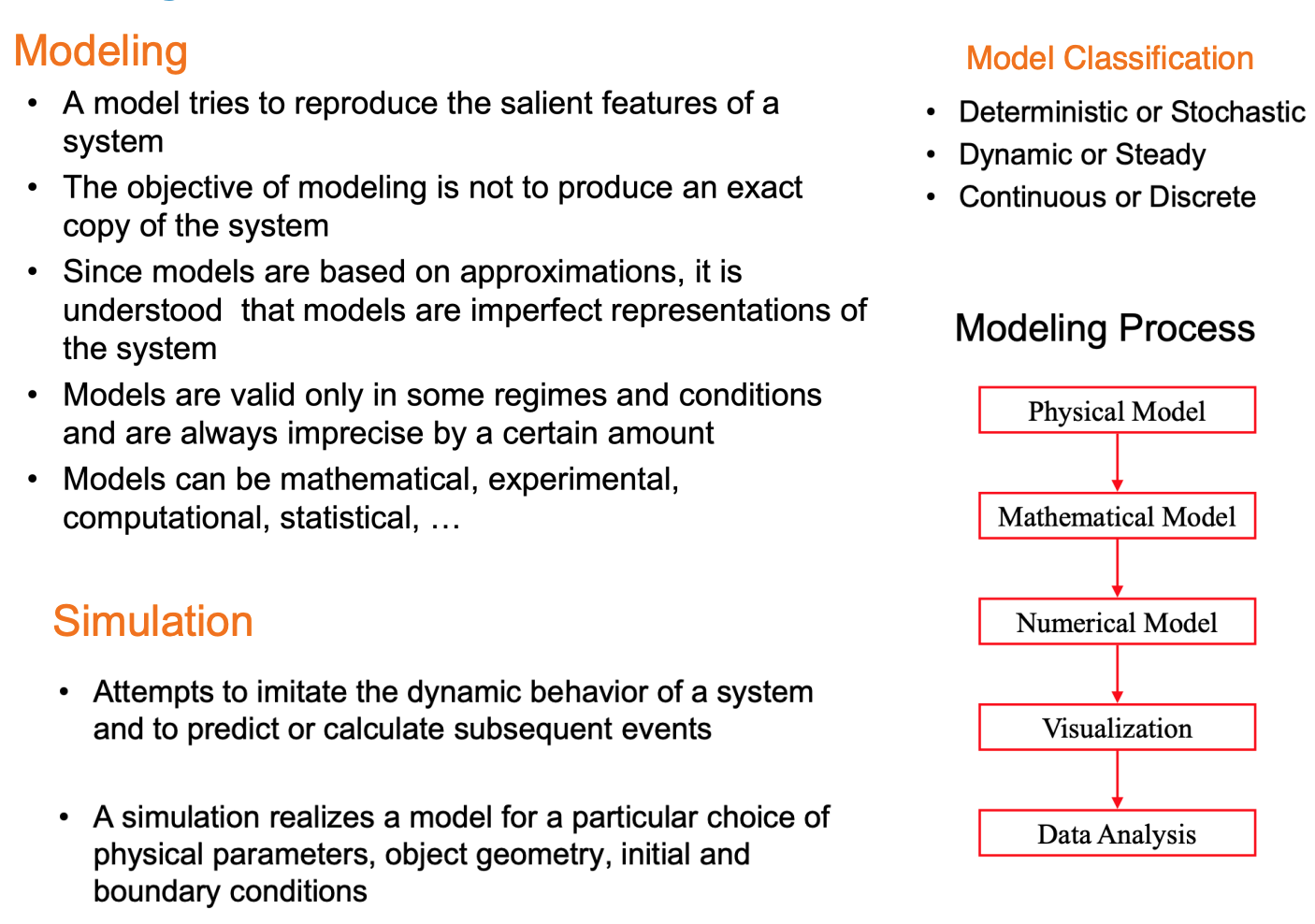
Modeling vs simulation
Example: Temporal differential model 1
- Often, dynamic processes are studied via
differential equations, where the independent variable is time.
- This is not the focus of today’s lecture, but it is an important branch of applied mathematics
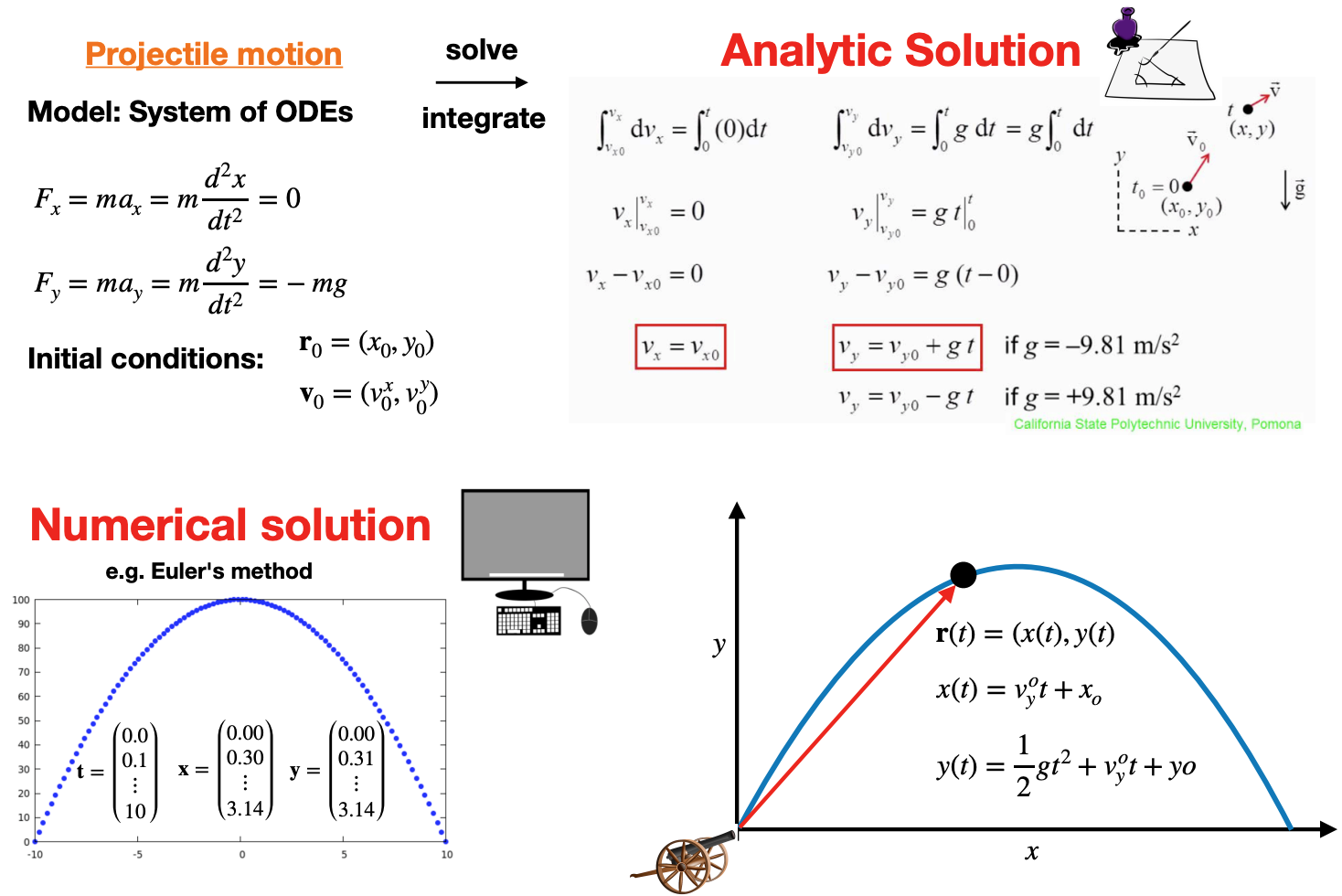
- On paper, differential equations treat time as continuous, but in the computer we must always discretize our variables.
Boundary conditions
- Boundary conditions (BC) are another important “ingredient” in many simulation and differential models
- The BC encode specific instructions regarding how quantities should “interact” with the “edge” of the simulation cell.
- “Boundary conditions” are typically “fixed” or “periodic”
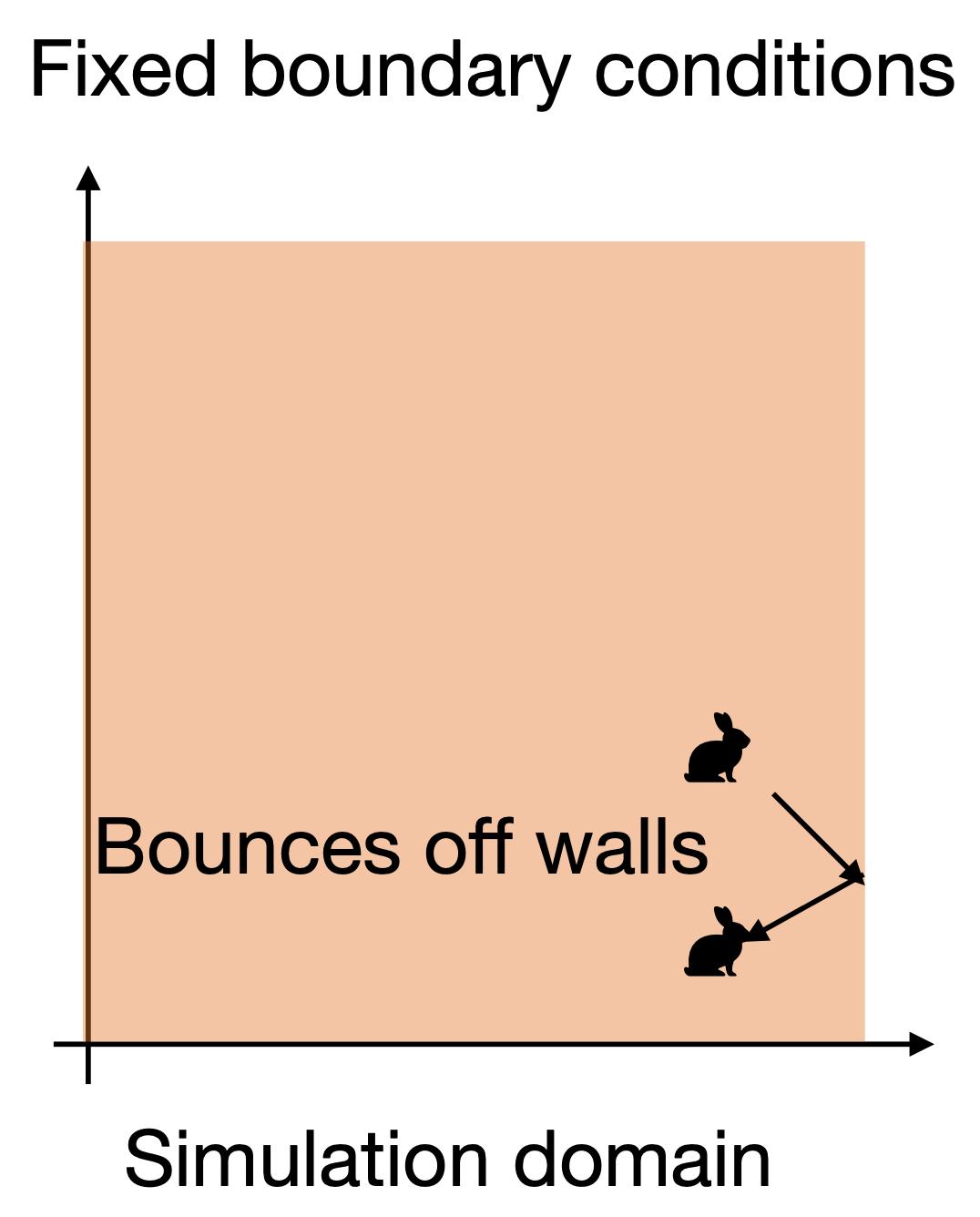
Fixed Boundaries
- Simulates a rigid edge: i.e. bounce off the edge or interact with fixed nodes
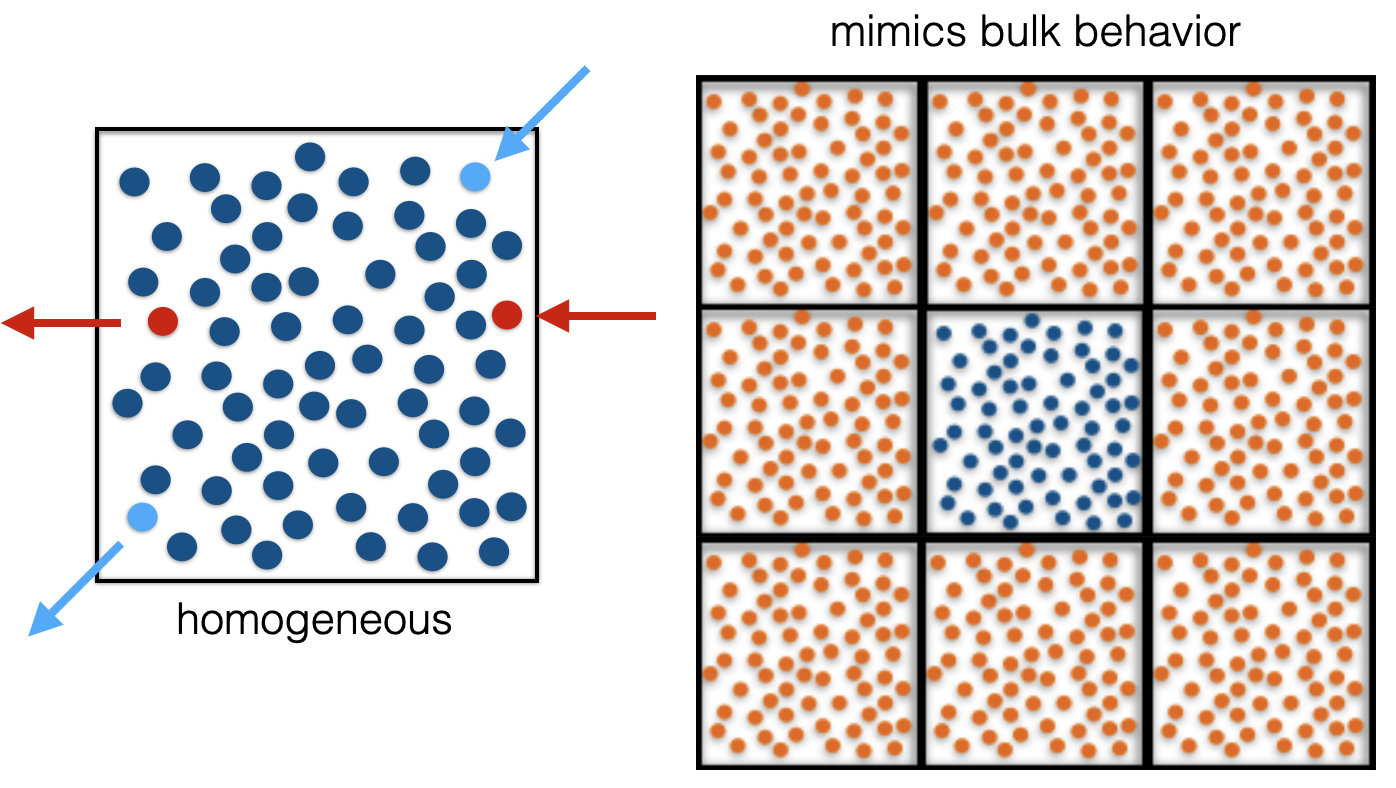
Periodic boundary conditions
- With periodic boundary conditions, if something leaves the simulation domain, it wraps back around and re-enters the other side (Out one side, in the other)
NOTE:Not all network simulations require boundary conditions (some do, some don’t)![]()
Interaction cutoffs
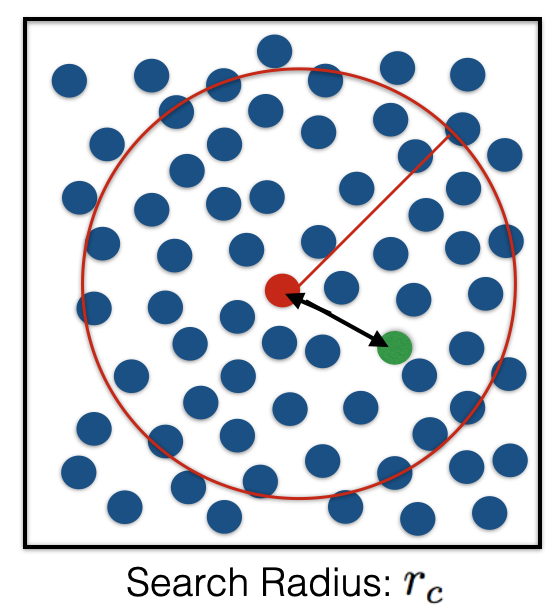
- To accelerate computation, it is also common in simulations to only consider a finite set of interactions
- For example, in a physical atomic simulation, you might only consider the closest atoms within some search radius
NOTE:Not all network simulations require interaction cut-offs (some do, some don’t)![]()
Network flux and diffusion mechanisms
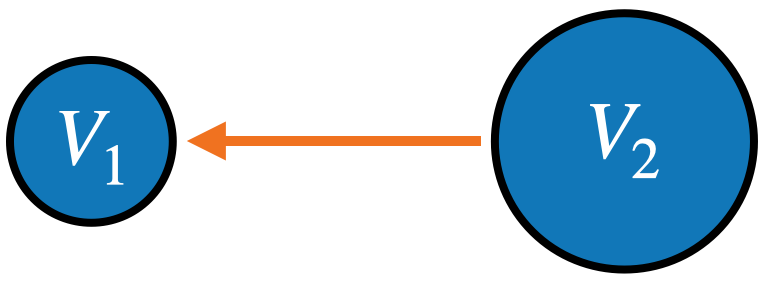
Definition: Flux is the action or process of flowing.
Overview
- Something flowing through the network is a common source of a dynamic process.
For example, Oil flowing between refineries, kinetic energy flowing between atoms (thermal conduction), people flowing between cities, etc
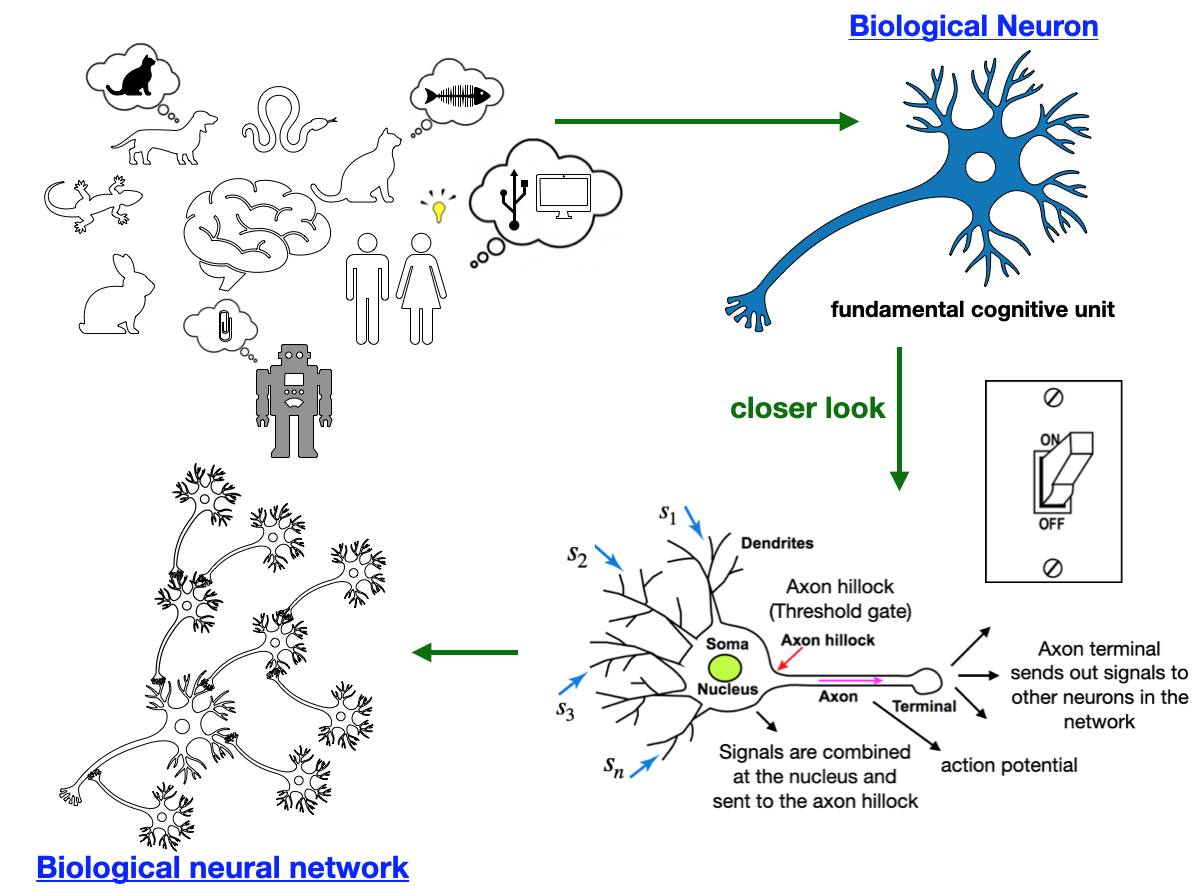
Example: Biological neural network
Neuronal firing causes communication between neurons via electrical impulses (current) and neurotransmitters (molecules).


Biological neural networks
Continuous flow
- Some quantities can flow (vary)
continuously(e.g water flowing through a pipe) - The flow is facilitated by a transportable medium (e.g mass, money, electrons, energy)
Example: Water flow 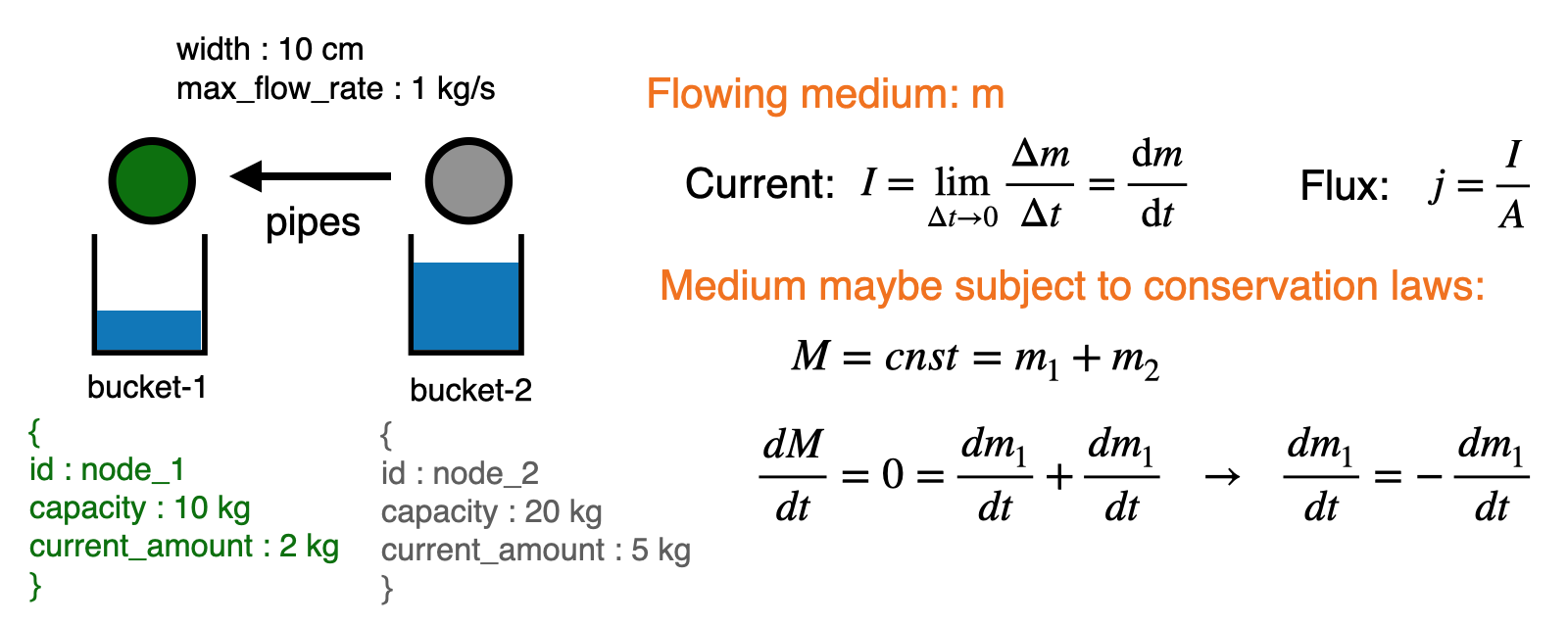
Discrete flow
- Some quantities are inherently
discreteand can NOT vary continuously.- These are generally
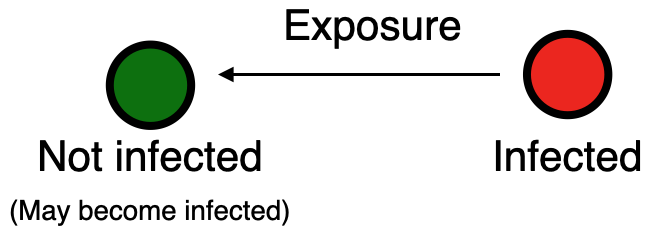
binaryormulti-classcategorical quantities: For example, illness, ideas/memes, opinions, etc
- These are generally
- As time progresses, part of they system transitions from one discrete state to another
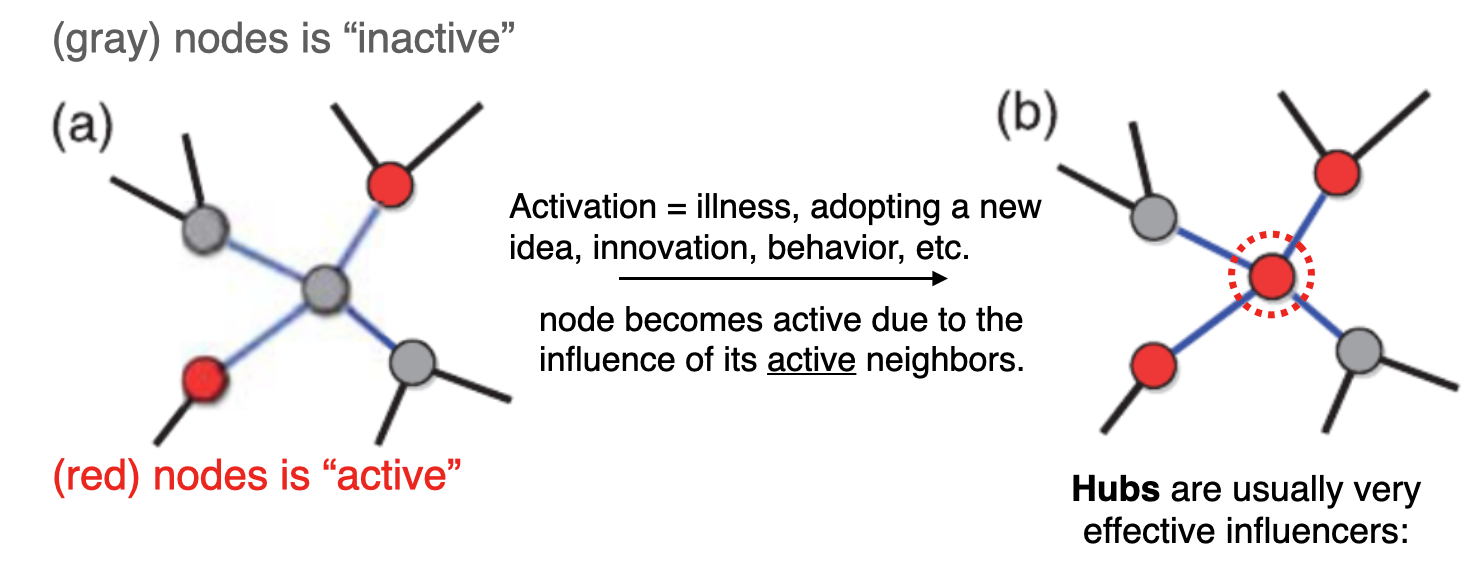
Example: Discrete (binary) transmission.
spreading of social effects is often called social contagion, because such processes often resemble disease transmission
![]()
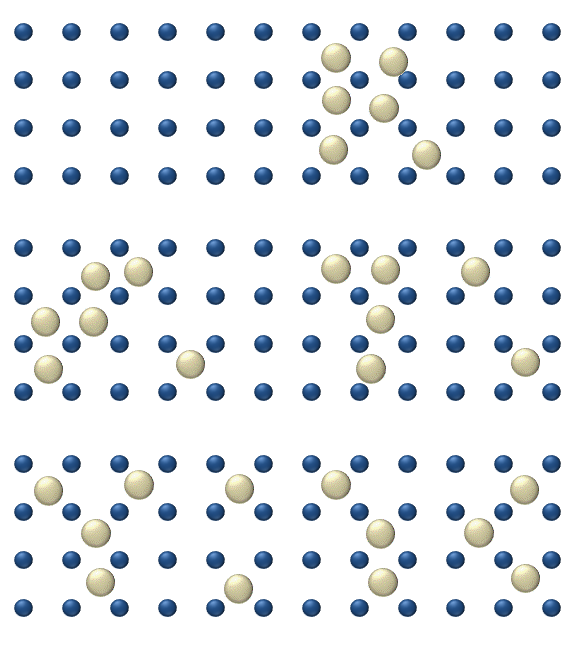
Example: Physical diffusion
- Atomic diffusion is a diffusion process whereby the random, thermally-activated movement of atoms in a solid results in the transport of atoms
- If the occupation sites are treated as discrete locations, then this phenomenon can be modeled as a discrete process.
Diffusion mechanisms
- When something
flows, we generally want to understand why it is happening and describe the process mathematically. - One common mechanism is caused by an in-equality (gradient) in some quantity in different regions of the network.
- In some systems there is an
equilibriumstate. If the system is in anon-equilibriumstate, then there will be adriving forceto re-distribute resources and re-establish equilibrium.
Example: We are often exposed to ideas and/or germs via friends/neighbors. The extent of the difference between our ideas, and our neighbors, may trigger a diffusion event
Linear restoring forces
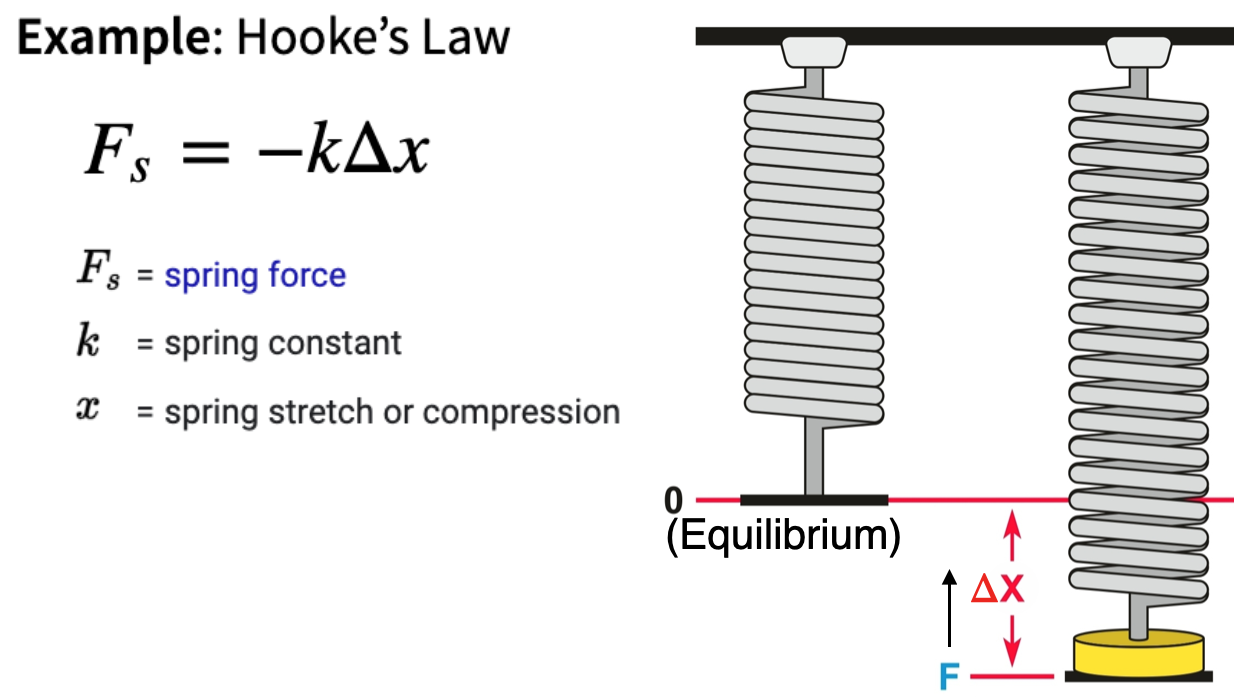
- While not always the case, often it is reasonable to assume a linear dependence between variables.
- In fact, any function can be locally approximated as a linear function (i.e. the first order term in the
Taylor series) \[f(x)=f(a)+f^{\prime}(a)(x-a)+\frac{f^{\prime \prime}(a)}{2 !}(x-a)^2+\ldots\] - In physics, the restoring force of some quantity often depends linearly on a perturbation \(\Delta x\) in some other quantity
- The same is also often true of the flux in some quantity for restoring forces
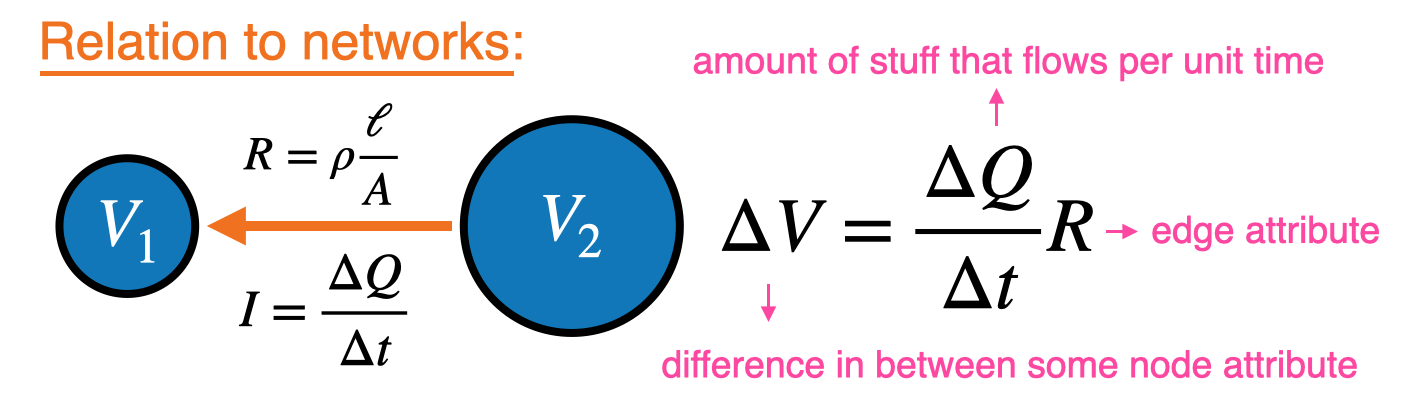
- The linearity introduces a constant of proportionality \(k\)
Example: Electrical flow
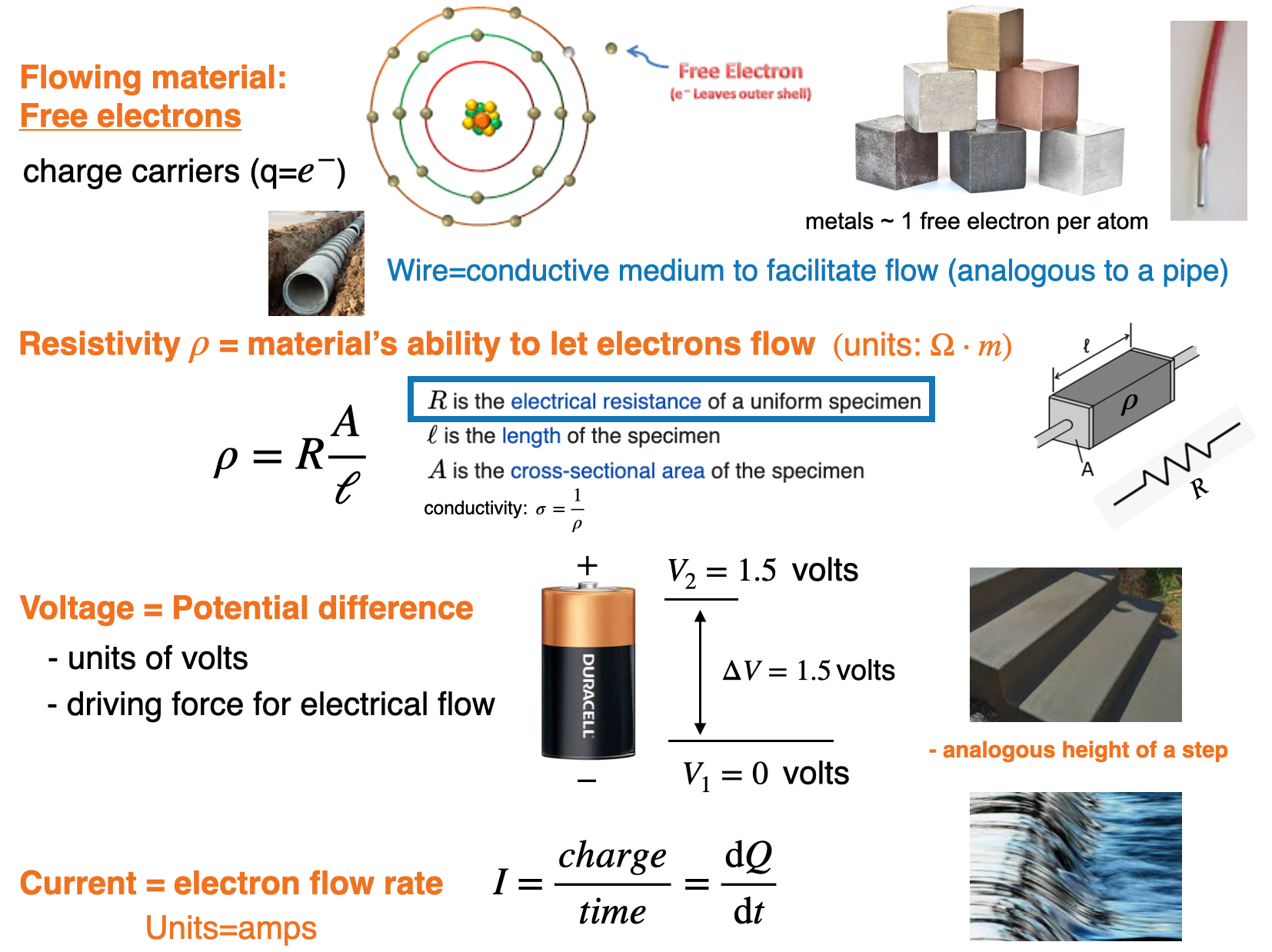
Simple electrical circuit
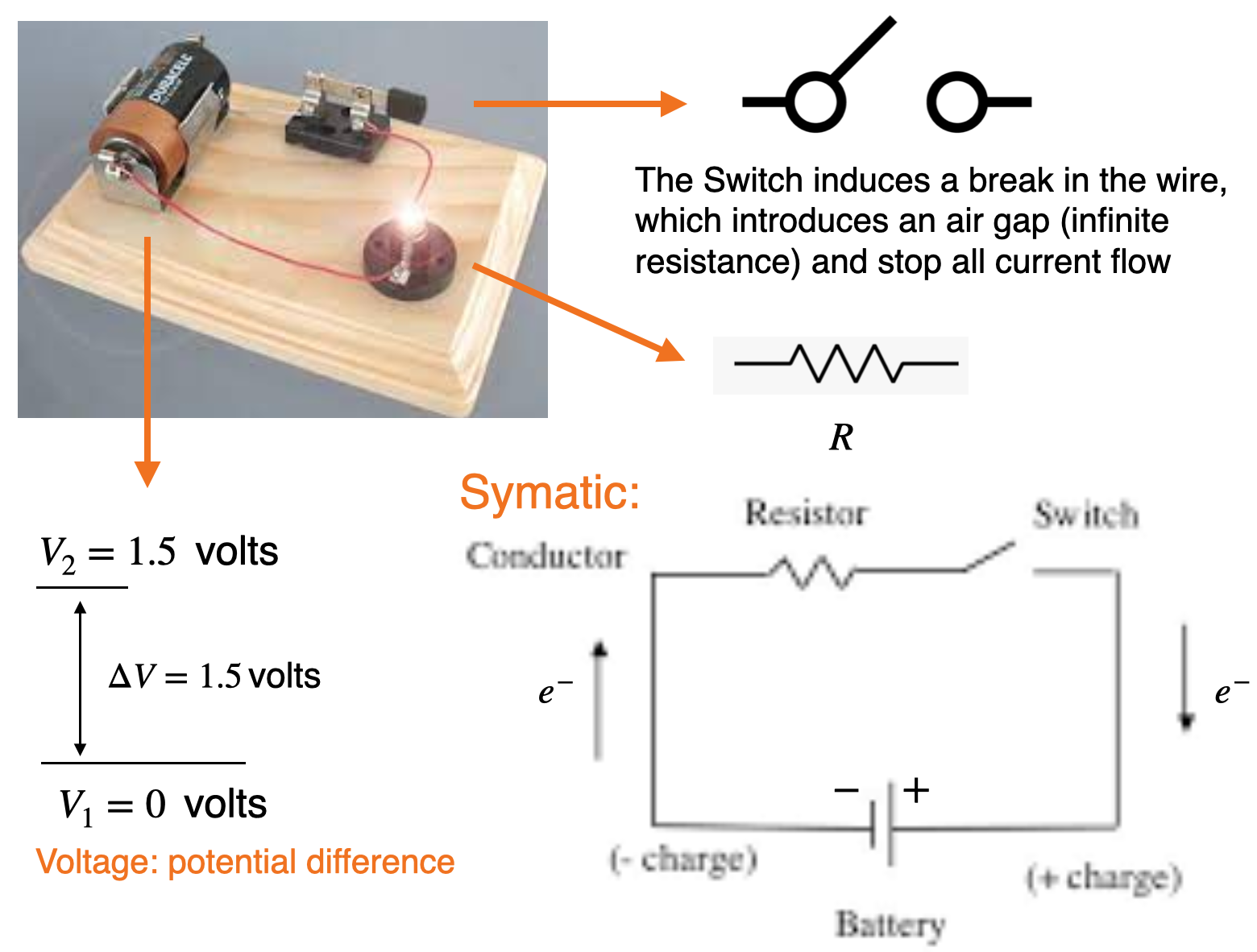
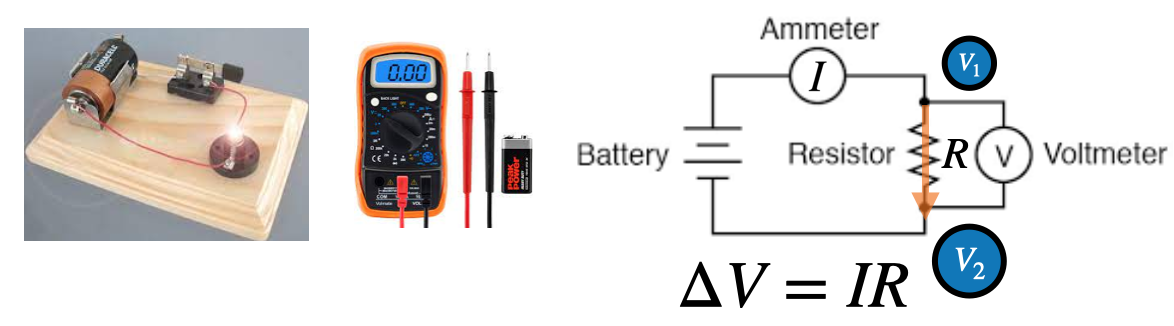
Ohms law
Ohm's law\(\rightarrow\) The current through a conductor, between two points, isdirectly proportionalto the voltage (potential difference) across the two points.
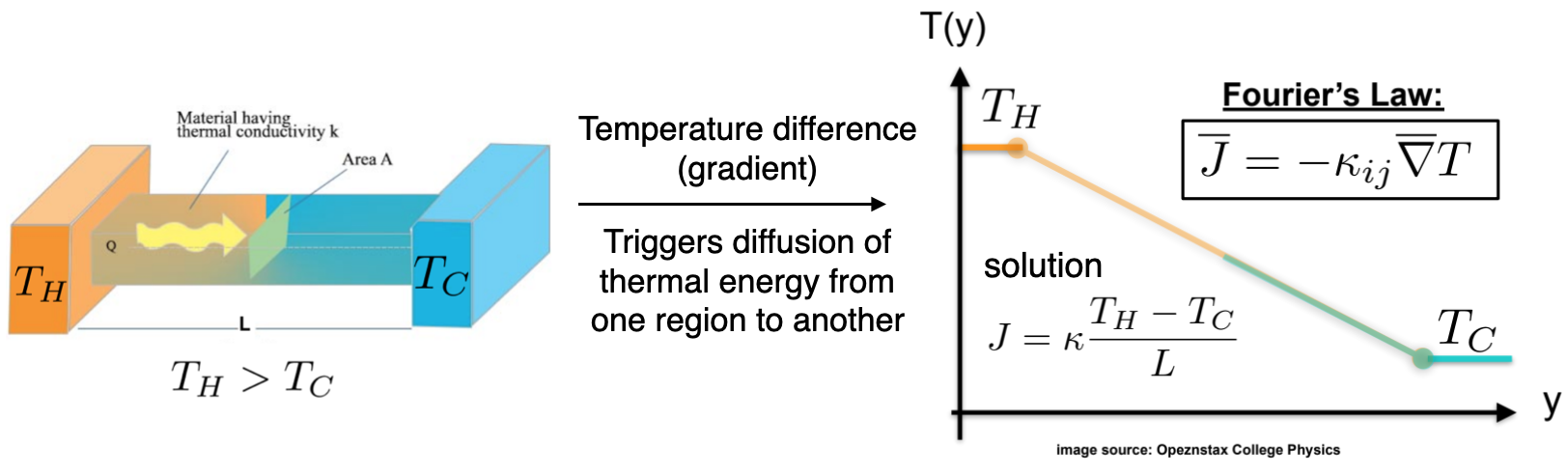
Thermal diffusion mechanism
Conductionis the process by which heat is transferred from the hotter end to the colder end of an object. The ability of the object to conduct heat is known as its thermal conductivity, and is denoted k.- The law of heat conduction, also known as Fourier’s law, states that the rate of heat transfer through a material is proportional to the negative gradient of temperature, with respect to space.